Two events can use many of the same AV technologies and still require completely different production plans.
A corporate conference, fundraising gala, worship gathering, and outdoor festival may all need sound, video, lighting, staging, and technical crews. But the way those systems are designed and operated should reflect what is actually happening at the event.
For Texas event planners, this is an important distinction.
The best production plan does not start with a generic equipment package. It starts with the audience, the program, the venue, and the experience the event needs to create.
Why the Type of Event Changes the AV Plan
AV production is not simply about how many microphones, screens, speakers, or lights are needed.
Two events with the same attendance can have very different technical requirements.
A 500-person corporate conference may depend heavily on:
Clear speech
Presentation management
Video playback
Cameras
Breakout room coordination
Tight scheduling
A 500-person worship event may put more emphasis on:
Live music
Stage monitoring
Lighting
Video
Livestreaming
Balancing music and spoken content
A gala with the same attendance may need to support:
Executive remarks
Sponsor videos
Auctions
Awards
Entertainment
Fundraising moments
Rapid program transitions
That is why strong event production planning begins with the program, not the equipment list.
Verum AV Solutions provides event production services across audio, video, lighting, staging, technical planning, livestreaming, and on-site support. The combination of those services should change depending on the event.
Corporate Conferences: Keep Communication Clear
Corporate conferences are usually communication-heavy events.
Executives need to deliver presentations clearly. Panels need consistent audio. Videos need to play at the right moment. Attendees may move between general sessions and breakout rooms.
The technology should support all of that without becoming a distraction.
Clear Audio Comes First
For most corporate events, speech intelligibility is one of the biggest priorities.
Attendees should be able to comfortably understand:
Keynote speakers
Panel discussions
Q&A sessions
Moderators
Remote presenters
Announcements
Audio planning should take the size and shape of the room into account rather than simply adding more speakers.
Presentation Management Matters
Corporate events often involve multiple presenters, laptops, videos, slides, and last-minute changes.
That means presentation management can become just as important as the physical AV equipment.
The production team may need to manage:
Multiple presentation files
Speaker laptops
Video playback
Updated slides
Different screen formats
Transitions between speakers
A smooth presentation workflow helps prevent unnecessary delays on stage.
The Run of Show Drives Technical Decisions
A keynote may transition directly into a panel discussion.
A panel may be followed by a video.
A remote presenter may join immediately after a live speaker.
Each transition can involve changes to microphones, lighting, video, cameras, and stage positions.
The technical team therefore needs to understand the agenda before show day.
Verum’s corporate event production services support conferences and business events with audio, video, lighting, staging, presentation support, livestreaming, and technical production.
Galas and Fundraisers: Support the Flow of the Evening
Galas and fundraising events create a different type of production challenge.
A single evening may include:
An opening video
An emcee
Executive remarks
Sponsor recognition
Donor stories
An auction
Awards
Entertainment
A fundraising appeal
Each part of the program may require a different technical setup.
Every Moment Needs a Different Feel
A sponsor video may require strong video playback and screens positioned throughout the room.
An auction needs clear speech and audience engagement.
A musical performance may require an entirely different lighting and audio approach.
The technical environment has to transition smoothly between those moments.
The Room Layout Affects Production
Dinner tables, décor, service areas, and guest traffic all affect AV planning.
For example:
Tables can create sightline problems
Décor can affect speaker placement
Service routes may conflict with cables or equipment
Camera positions may need to avoid blocking guest movement
Lighting needs to support both dinner and stage programming
These details should be addressed before equipment is placed.
Production Should Support the Purpose of the Event
For nonprofit and fundraising organizations, the technical production should help guests focus on the mission and the program.
The technology should make it easier for guests to hear important stories, follow the program, and stay engaged.
It should not feel like the technology itself is the main attraction.
Worship Events: Audio Has a Different Job
Worship events often combine spoken communication and live music within the same program.
That creates a different set of technical requirements from a corporate conference.
Spoken Word and Live Music Need to Work Together
A pastor or speaker needs to be easy to understand.
At the same time, a worship band may include:
Multiple vocalists
Drums
Guitars
Keyboards
Playback systems
In-ear monitors or stage monitors
Multiple microphones and audio inputs
The audio system needs to support both parts of the program without sacrificing clarity.
Stage Production Is Often More Active
Worship events may also involve:
Multiple musicians
Lighting changes
Lyrics on screens
Video playback
Cameras
Livestreaming
Guest speakers
That makes stage coordination especially important.
Livestreaming Can Be Part of the Core Experience
Many worship organizations also need to reach people who are not physically in the room.
That means the production may need to consider both the in-person experience and the broadcast experience.
Verum’s church AV event production services include sound, lighting, visual production, livestreaming, and on-site technical support for worship environments.
Festivals and Concerts: Think Beyond the Stage
Festivals and concert events shift the technical priorities again.
Audio performance, lighting, video, stage operations, artist requirements, and production logistics may all become central to the event.
Outdoor Events Create Different Challenges
An outdoor venue does not behave like a hotel ballroom.
The production plan may need to consider:
Wider audience areas
Temporary stages
Equipment placement
Backstage areas
Technical control positions
Access routes
Power
Weather considerations
Setup and breakdown logistics
The entire site becomes part of the production environment.
Artist Changeovers Need Planning
Festivals with multiple performers create additional complexity.
One act may leave the stage while the next prepares to perform.
That can involve changes to:
Microphones
Instruments
Monitors
Playback systems
Lighting
Stage layouts
Those transitions need to happen efficiently without interrupting the audience experience.
Video Plays a Different Role at Large Events
At a conference, screens may primarily display presentations.
At a festival or concert, video may help people farther from the stage see the performers and follow the show.
Lighting also becomes a larger part of the visual experience.
Verum provides music festival production as part of its broader event production capabilities.
The Venue Can Completely Change the Production Plan
The event type is only one part of the equation.
The venue matters just as much.
Two corporate conferences with identical attendance may need completely different AV plans if one is held in a hotel ballroom and the other is held in a large convention facility.
Venue Factors That Affect AV Planning
Important considerations include:
Ceiling height
Room width
Rigging options
Available power
Internet connectivity
Stage dimensions
Backstage space
Loading access
Setup time
Venue restrictions
Audience layout
Even screen placement can change dramatically depending on the room.
A production plan should adapt to the venue instead of forcing a standard setup into every space.
Audience Size Matters, but Complexity Matters More
Attendance is important, but it does not tell the whole story.
A 300-person executive conference can sometimes be more technically complex than a 1,000-person general session.
Consider a smaller event with:
Several remote speakers
Multiple cameras
Presentation playback
Recording
Branded video content
A tightly timed agenda
Now compare that with a larger event where the primary requirement is one speaker and one presentation.
The larger room may require more audio coverage and larger displays, but the smaller event may involve more interconnected systems.
Questions That Help Define the Real Scope
Before building the production plan, ask:
How many different things need to happen during the event?
How many technical systems need to work together?
How often does the stage configuration change?
Are there remote presenters or attendees?
Is the event being recorded?
Is the event being streamed?
Are there live performers?
How important are visual design and branding?
How much time is available for setup and testing?
These answers are often more useful than attendance alone.
What Should Stay Consistent Across Every Event?
The technical priorities may change, but the fundamentals of good production should not.
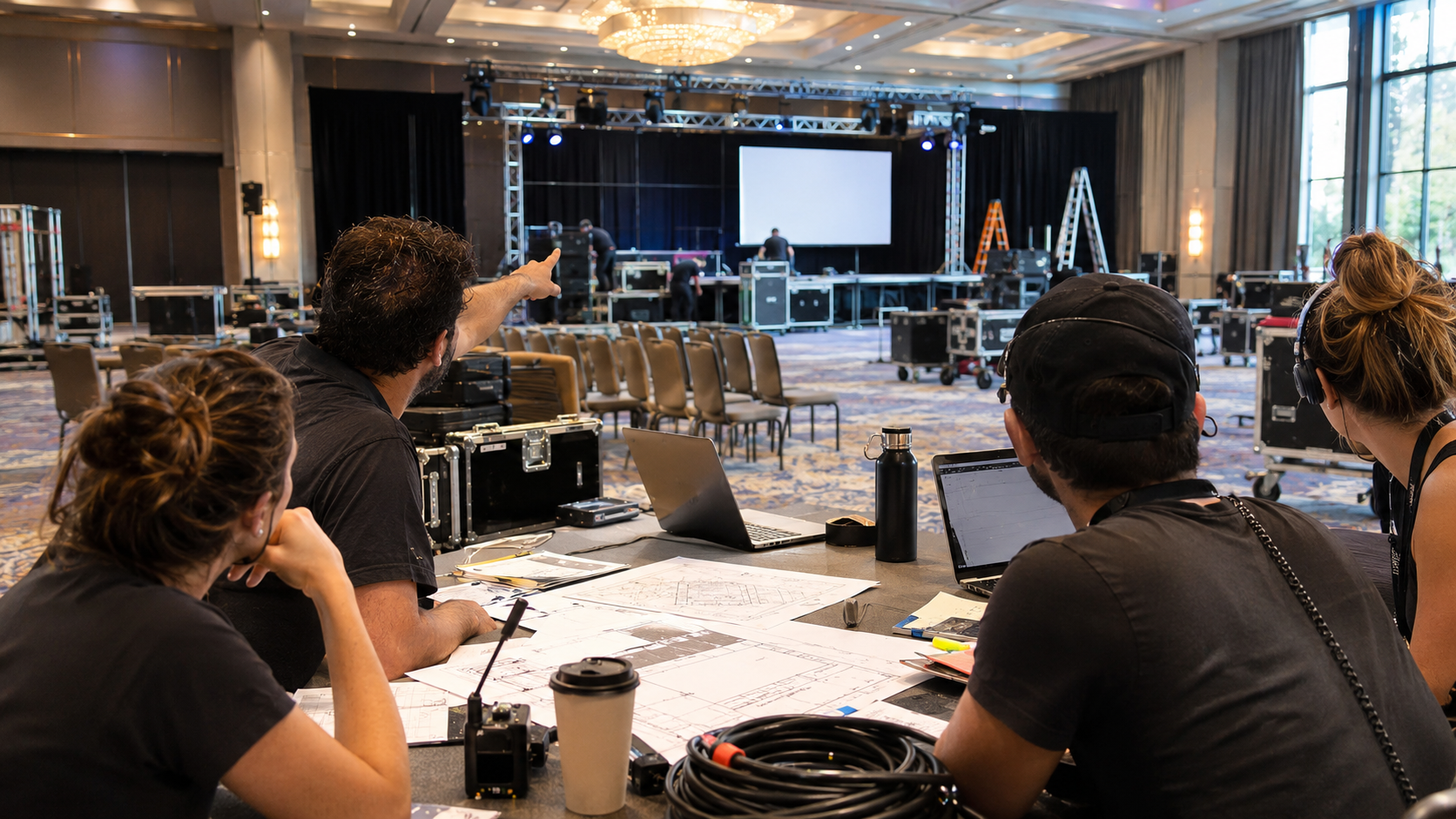
1. Plan Around the Venue
The production should work with the room rather than against it.
2. Understand the Program Early
The technical team should know what is happening before show day.
3. Test Important Content
Presentations, videos, audio, livestreaming, and other important content should be checked before the audience arrives.
4. Make Responsibilities Clear
Everyone should understand who is responsible for the technical decisions and show-day execution.
5. Leave Time for Setup and Testing
A technically strong event still needs enough time to be built and tested properly.
6. Have a Clear Communication Process
Event planners and production teams should know how changes will be communicated when something shifts.
These principles matter whether the event is in Houston, Dallas, Austin, San Antonio, or another Texas market.
How to Determine What Your Event Actually Needs
Event planners do not need to design the technical system themselves.
But they should be able to explain what the event is trying to accomplish.
Start with the event type.
Then identify the moments that matter most.
For a Corporate Conference
Focus on:
Speaker clarity
Presentations
Video
Breakout rooms
Timing
Remote participation
For a Gala or Fundraiser
Focus on:
Program flow
Donor storytelling
Video content
Auctions
Entertainment
Stage visibility
For a Worship Event
Focus on:
Speech
Live music
Monitoring
Lighting
Video
Livestreaming
For a Festival or Concert
Focus on:
Performance audio
Stage transitions
Lighting
Audience coverage
Video
Production logistics
Once those priorities are clear, the technical team can determine how audio, video, lighting, staging, staffing, and other production elements should support them.
There Is No Universal AV Package for a Texas Event
The right production is not necessarily the biggest production.
It is the production that fits the event.
A corporate conference should not automatically be designed like a concert.
A worship event should not simply inherit a corporate ballroom package.
A gala should account for the way its program moves between speeches, videos, entertainment, and fundraising.
A festival needs a plan built around live performance and the realities of the site.
That is why event-specific planning matters.
Verum AV Solutions supports corporate events, conferences, galas, worship gatherings, concerts, festivals, hybrid events, and other live productions across Texas.
The goal is to build the technical approach around the venue, audience, program, and event objectives rather than forcing every client into the same setup.
If you are planning an event in Texas and want help determining what level of production actually fits your program, contact Verum AV Solutions for a free consultation and event-specific proposal.