What Does Full-Service Event Production Include? A Guide for Texas Event Planners
When an event planner hears “full-service event production,” it can sound like a broad industry phrase. In practice, it describes something much more specific: bringing the major technical parts of an event together under one coordinated production plan.
Instead of treating audio, video, lighting, staging, technical staffing, and show operation as separate pieces, full-service production looks at how those systems need to work together from planning through show day.
For corporate conferences, general sessions, galas, fundraisers, live events, product launches, worship events, and other complex programs, that coordination can become just as important as the equipment itself.
What Does Full-Service Event Production Include?
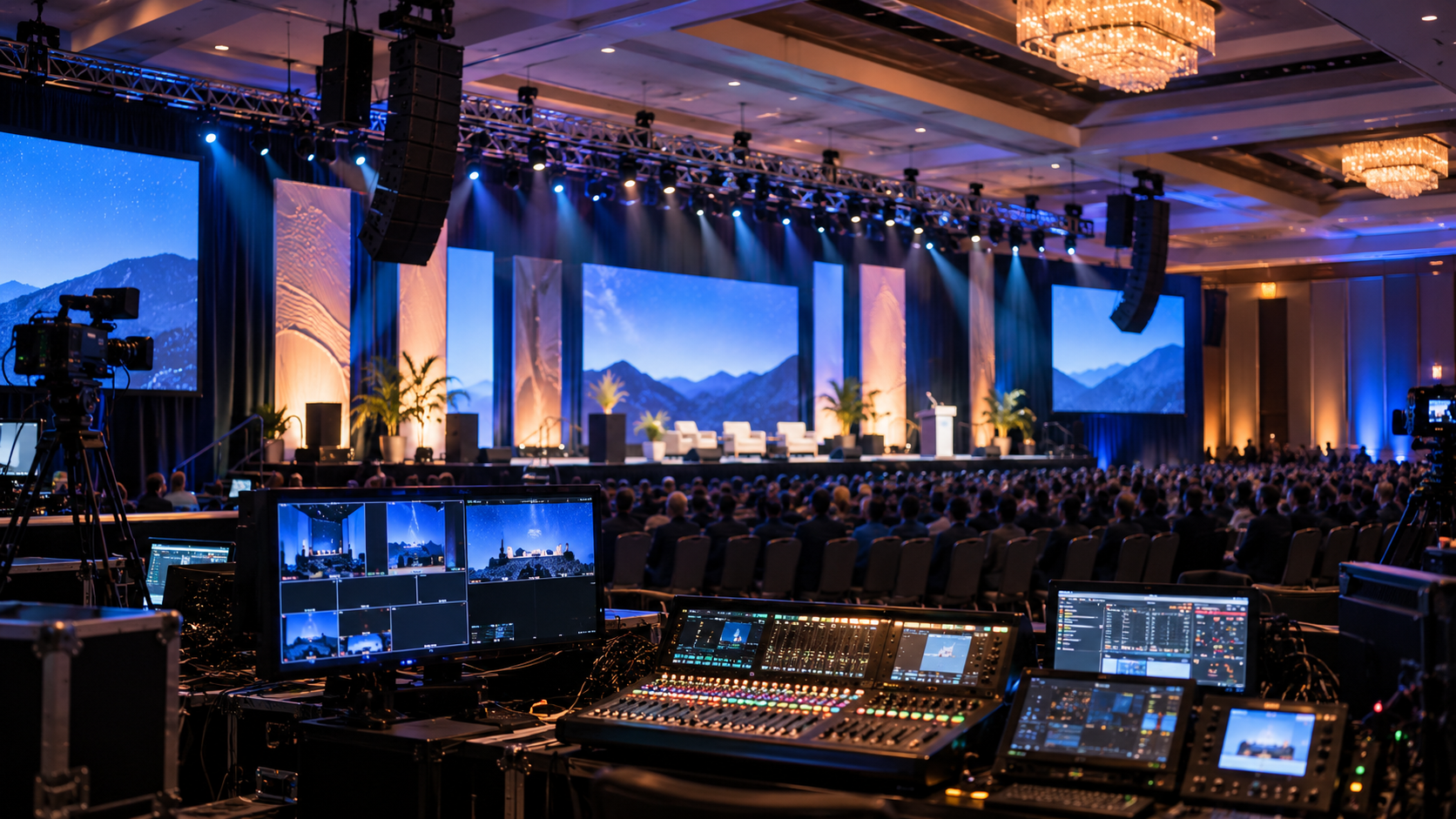
Full-service event production typically combines technical planning, audiovisual systems, staging, production staffing, and live execution into a single coordinated scope.
The exact requirements depend on the venue, audience, schedule, content, event format, and production goals. A corporate meeting with several presenters will require a different system than a concert, fundraising gala, multi-room conference, or outdoor event.
For planners who need a broader production solution, professional event production services can bring multiple technical disciplines together rather than treating each one as a separate decision.
Audio and Sound
Audio production involves more than placing speakers in a room. The production plan may need to account for microphones, mixing, speaker placement, audience coverage, playback sources, presenters, performers, and communication between technical crew members.
The goal is not simply louder sound. It is clear, consistent audio that supports the way the event is actually being used.
Video and Visual Displays
Video requirements can include presentation displays, projection, LED displays, cameras, playback systems, switching, recording, or livestreaming.
The right approach depends on factors such as room dimensions, audience sightlines, presentation content, camera requirements, and whether remote viewers need to participate.
Lighting
Event lighting affects visibility, atmosphere, camera quality, stage focus, and the overall appearance of the room.
A production team may coordinate stage lighting, room lighting, speaker lighting, scenic elements, and programmed cues as part of the larger show plan.
Lighting decisions should support the purpose of the event rather than exist as an isolated effect.
Staging and Production Layout
Staging connects the technical system to the physical environment.
Stage dimensions, screens, lecterns, scenic elements, lighting positions, camera locations, audio coverage, and audience seating can all affect one another.
This is why production planning should begin with the actual event space, agenda, and audience instead of simply selecting equipment from a list.
Technical Crew and On-Site Support
Equipment alone does not run an event.
Depending on the scope, a production may require audio technicians, video operators, lighting technicians, camera operators, show callers, stage support, or other technical roles.
On-site technical support also gives the production team a way to respond when presentations change, schedules move, speakers arrive with different requirements, or other show-day adjustments become necessary.
Full-Service Production vs. AV Equipment Rental
One of the most important distinctions for event planners is the difference between renting AV equipment and hiring a production team.
An equipment rental may be the right solution when the organizer already knows exactly what is required and has the technical experience or personnel to install and operate it.
Full-service production adds planning, technical design, staffing, coordination, setup, operation, troubleshooting, and other support based on the needs of the event.
Verum AV also offers audiovisual services for organizations with specific AV needs, giving planners a useful distinction between individual equipment or technical requirements and broader event-production support.
Why Integrated Production Matters for Complex Events
Complex events create dependencies. A change to one technical element can affect several others.
For example:
A larger stage can change screen placement and lighting positions.
A revised seating layout can affect speaker coverage and audience sightlines.
An additional presenter can change microphone, playback, and rehearsal requirements.
A livestream can add camera, audio routing, connectivity, and staffing needs.
A schedule change can affect crew timing, rehearsals, cues, and room transitions.
When different vendors control different parts of that system, planners may also need to manage the handoffs between them.
A full-service production structure can reduce those handoff points by giving the technical disciplines one shared production plan.
That does not eliminate every possible event-day challenge, but it can make responsibilities, communication, and technical dependencies easier to manage.
What the Full-Service Event Production Process Usually Looks Like
1. Define the Event Requirements
The production team first needs to understand what the event is trying to accomplish.
Useful information includes the venue, room layout, audience size, agenda, speakers, entertainment, presentations, branding requirements, streaming needs, and important timing constraints.
Understanding those details early helps shape the technical plan around the event rather than forcing the event into a predetermined equipment package.
2. Build the Technical Scope
Once the requirements are understood, audio, video, lighting, staging, staffing, and other production elements can be scoped around the event rather than selected independently.
This is especially important for corporate event production, where conferences, meetings, product launches, galas, and multi-session programs can involve several production needs at the same time.
For organizations planning events in the Houston market, Verum AV provides corporate event production services built around these types of technical requirements.
3. Coordinate Pre-Production Details
Before load-in, the technical team needs accurate information.
That can include schedules, room access times, presentation formats, speaker needs, venue requirements, power considerations, content deadlines, and rehearsal plans.
The more complex the program becomes, the more important this coordination becomes.
A conference with multiple speakers, rooms, visual elements, or live transitions requires more advance planning than a simple meeting with a single microphone and screen.
4. Load In, Test, and Rehearse
Production equipment needs to be installed, connected, configured, and tested before the audience arrives.
Depending on the event, rehearsals may also be used to confirm presentations, microphones, video playback, lighting cues, camera framing, and transitions.
Testing is particularly important when several systems depend on one another.
A video feed, for example, may involve cameras, switching, displays, audio routing, playback systems, and potentially a livestream. Each part of that signal path needs to function as part of the larger production.
5. Operate the Show
During the event, technicians manage the systems and respond to the live program.
This is where preparation and technical coordination meet the realities of a live event.
Schedules can shift. Presenters can change. Content can arrive late. Sessions can run long. Production requirements can change as an event unfolds.
A production plan should be organized enough to maintain consistency while still allowing the technical team to respond when the event changes.
When Does an Event Need Full-Service Production?
Not every event requires a large production package.
A small internal meeting with simple presentation needs may only require basic equipment and limited technical support.
Full-service production becomes more relevant as the number of technical dependencies grows.
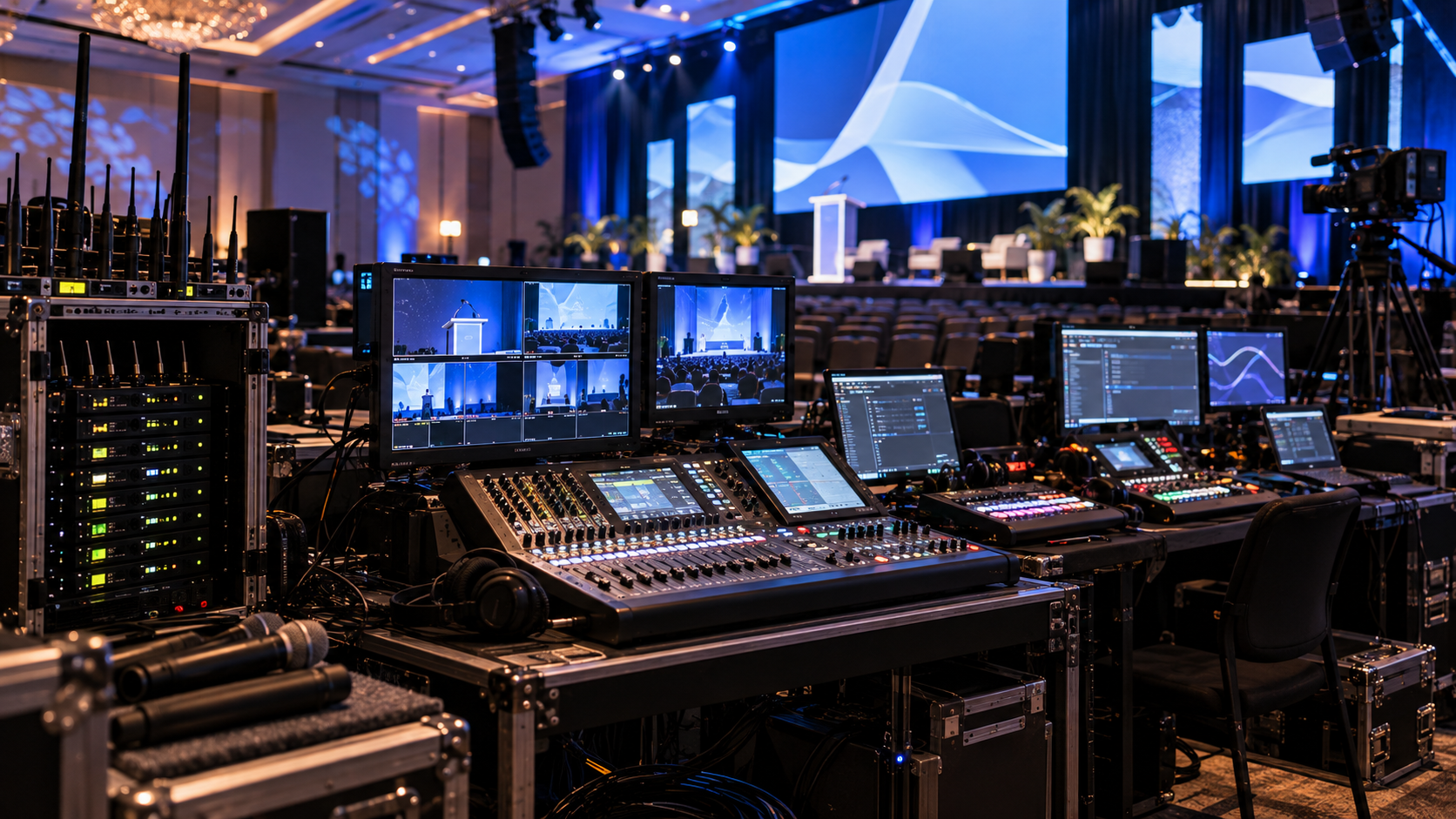
It may be worth considering full-service event production when:
Multiple presenters or performers need coordinated microphones and content.
The event includes several screens, cameras, lighting systems, or playback sources.
The program includes a livestream or remote audience.
The schedule includes rehearsals, cue-heavy presentations, awards, entertainment, or frequent transitions.
The venue requires significant staging, technical setup, or load-in coordination.
The event spans multiple rooms or multiple days.
The organizer needs technicians to operate the systems throughout the event.
Audio, video, lighting, and staging all need to work together as part of the same program.
In those situations, the question is no longer just, “What equipment do we need?”
It becomes, “How will all of these systems and people work together throughout the event?”
That is the problem full-service production is designed to address.
What Texas Event Planners Should Share With a Production Company
A production company can build a more useful technical plan when the planner provides as much event context as possible.
Helpful information includes:
Event date and venue
Estimated audience size
Room layouts and event spaces
Draft agenda or run of show
Number of presenters or performers
Presentation and playback requirements
Livestreaming or recording needs
Branding and visual requirements
Load-in and rehearsal windows
Known venue restrictions or technical requirements
These details help move the conversation away from generic equipment packages and toward a production scope built around the actual event.
They can also reveal technical dependencies that may not be obvious at the beginning of the planning process.
For example, adding a remote presenter may affect far more than video. It can also affect audio routing, monitors, connectivity, presentation workflow, rehearsals, and technical staffing.
The earlier those requirements are identified, the easier it is to build them into the production plan.
What Full-Service Production Looks Like for Corporate Events
Corporate events often require several technical systems to operate together.
A general session might involve wireless microphones, presentation playback, confidence monitors, stage lighting, cameras, video switching, audience displays, walk-in music, branded graphics, and recording.
A multi-day conference may add breakout rooms, multiple crews, schedule changes, speaker transitions, and different presentation requirements throughout the venue.
An awards program or gala may combine speeches, videos, music, lighting cues, walk-up moments, scenic elements, and entertainment.
The technical scope changes from event to event, but the need for coordination remains the same.
Instead of evaluating each technical element individually, full-service production considers how those elements support the complete attendee experience.
What About Churches, Nonprofits, and Fundraising Events?
The same production principles apply outside traditional corporate events.
Church conferences, nonprofit gatherings, political or fundraising events, and community programs can involve many of the same production requirements, including:
Live audio
Presentation content
Video playback
Cameras
Lighting
Staging
Livestreaming
Speaker or performer support
Technical staffing
The appropriate production scope still depends on the size, complexity, venue, audience, and goals of the event.
A smaller nonprofit event may need a relatively simple technical setup, while a large fundraising program with entertainment, video content, multiple speakers, and livestreaming may require much more coordination.
The important point is that production should be designed around the event rather than around a predetermined list of equipment.
Full-Service Event Production Is About Coordination, Not Just Gear
The value of full-service event production is not simply having access to more equipment.
It is having audio, video, lighting, staging, staffing, and live execution considered as parts of the same production.
For planners producing corporate events, conferences, galas, nonprofit programs, worship events, fundraisers, and other live experiences across Houston and Texas, that integrated approach can make complex technical requirements easier to organize and easier to operate on show day.
Verum AV Solutions provides event production and audiovisual services for organizations planning live events in Texas.
If your next event involves more than a basic equipment setup, you can learn more about Verum AV Solutions’ Houston event production services and request a free consultation or quote to discuss your event, technical requirements, and production scope.