When event planners compare AV companies, the equipment lists can start to look surprisingly similar. Microphones, speakers, LED displays, lighting, cameras, staging, and technicians are all important, but they do not tell you what working with that company will actually feel like.
That difference often becomes clear after the contract is signed.
Will someone answer when the agenda changes? Will your AV team flag a potential issue before it becomes your problem? Will they stay engaged during the weeks between booking and show day? And when the event is approaching, will you know exactly who is responsible for what?
For event planners, hotels, conference centers, universities, nonprofits, churches, and corporate teams, those questions can matter just as much as the equipment itself.
A reliable AV partner is not simply a company with good gear. It is a production team with a dependable communication process behind that gear.
AV Reliability Is About More Than Equipment
Technical capability is the baseline.
A professional event production partner should understand sound, video, lighting, staging, streaming, power, signal flow, room layouts, and the countless details required to produce a successful event.
But technical skill alone does not automatically create a low-stress planning experience.
A production can have excellent equipment and still be difficult to manage if communication is inconsistent. When planners have to repeatedly ask for updates, chase down answers, or wonder whether a change was received, unnecessary uncertainty gets added to an already complicated event.
Silence Creates Planning Risk
There is often a long gap between signing an AV agreement and walking into the venue on event day.
During that time, schedules change. Speakers are added. Room layouts evolve. Presentation requirements become clearer. Attendance estimates move. Executive requests appear. Venue teams provide new information.
A strong AV partner stays engaged throughout that process instead of disappearing until load-in.
Responsiveness does not mean sending unnecessary emails every day. It means creating enough communication that the planner knows the production is moving forward and knows where to go when something changes.
A Prepared Crew Usually Starts With Prepared Communication
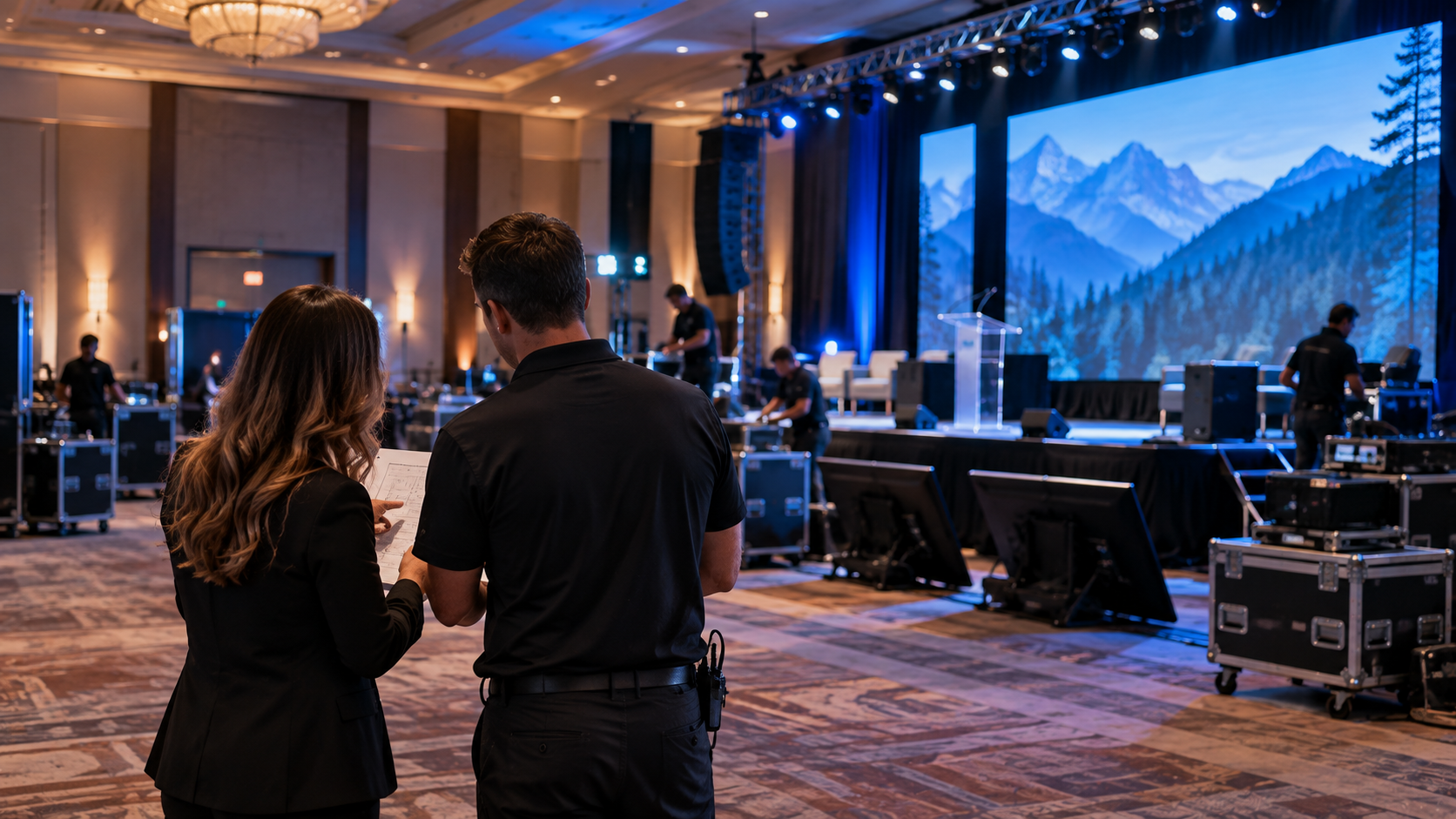
When an AV crew arrives knowing the schedule, venue requirements, room layout, presentation needs, speaker expectations, and production priorities, that preparation did not begin at the loading dock.
It started during planning.
The best show-day experiences are often the result of information being gathered, confirmed, shared, and updated before the first road case enters the building.
What Does White-Glove AV Service Actually Mean?
"White-glove service" can become an empty phrase if nobody defines what it looks like in practice.
For an event planner, it should mean more than courteous technicians and neatly organized equipment.
A true white-glove production relationship should make the AV side of the event easier to manage from the beginning of planning through the end of the production.
A Clear Point of Contact
Planners should know who owns communication for the project.
You should not have to resend the same information to multiple departments or guess who needs to hear about an important change.
A dependable point of contact creates accountability. That person can coordinate internally with the production team while giving the client a clear path for questions, approvals, and updates.
Structured Planning Touchpoints
Complex events benefit from planned moments to review progress rather than relying exclusively on last-minute email threads.
Depending on the event, that may include an initial discovery conversation, venue walkthrough, production review, updated scope discussion, run-of-show review, or final technical meeting before show week.
The exact process can vary. What matters is that both sides know when important decisions will be reviewed and confirmed.
A Pre-Event Technical Review or Rehearsal
Not every event requires a full rehearsal, but important technical elements should be reviewed before guests arrive.
Speaker presentations, walk-on cues, video playback, microphones, stage movement, livestream requirements, remote presenters, lighting cues, and other critical elements are easier to troubleshoot before the room is full.
For more involved productions, a technical rehearsal gives both the planner and production team an opportunity to work through transitions and identify questions while there is still time to solve them calmly.
Accessibility During Show Week
Show week is when responsiveness matters most.
That does not mean every last-minute request can or should be accommodated. It does mean your production partner should be reachable enough to evaluate changes, explain the impact, and provide a clear answer.
When a keynote speaker changes slides, a session moves rooms, the client adds a video, or a venue requirement changes, planners need an AV team that communicates rather than leaves them guessing.
Post-Event Follow-Up
A professional relationship should not necessarily end when the truck doors close.
For repeat clients, venues, annual conferences, and organizations with ongoing event calendars, a post-event recap can be valuable.
What worked particularly well? What should change next time? Were there recurring presentation issues? Could a room layout, equipment choice, or planning timeline be improved?
Capturing those lessons helps the next event start further ahead.
What Low-Stress AV Collaboration Looks Like for an Event Planner
A good AV relationship does not eliminate every change or challenge. Live events are too dynamic for that.
Instead, it reduces unnecessary uncertainty.
Before the event, you know who to contact and what information the production team needs. During planning, questions are addressed without repeatedly restarting the conversation. As event day approaches, responsibilities become clearer rather than more confusing.
On site, the crew arrives prepared and understands the production plan. When circumstances change, they communicate options instead of simply reacting. Afterward, important lessons can carry forward to the next event.
That is particularly important for hotels and conference properties where the AV team represents part of the overall guest experience.
A production partner working inside a venue needs to coordinate well with property leadership, event staff, outside planners, speakers, and clients. Verum AV's approach to hotel and resort AV partnerships is built around functioning as an extension of the venue team rather than operating as an isolated vendor.
Questions to Ask an AV Company About Communication Before You Book
Technical questions are important when evaluating production companies, but planners should also ask questions specifically about communication and workflow.
The answers can reveal a great deal about what the relationship will look like after the agreement is signed.
Who will be my main point of contact after we book?
How do you typically communicate with planners between booking and show day?
When do you review the final run of show and technical requirements?
How do you document changes to scope, schedules, rooms, or equipment?
Who should I contact if something important changes during show week?
How do your production and on-site teams receive updates from the planning team?
Do you recommend technical rehearsals or pre-event reviews for events like ours?
How do you handle last-minute requests when the requested change affects cost or production logistics?
What information do you need from our venue or internal team to arrive fully prepared?
How do you handle feedback or lessons learned for clients with recurring events?
Listen not only to the answers, but also to how clearly the company answers them.
A team with an established communication workflow should be able to explain that workflow without making the process sound mysterious.
Proactive Communication Makes Last-Minute Changes Easier to Manage
Changes are part of live events.
A speaker misses a flight. An executive wants another confidence monitor. Registration exceeds expectations. A presentation arrives in a different format. A breakout room changes. A remote presenter gets added.
The goal is not to pretend those situations will never happen.
The goal is to have a production partner capable of responding professionally when they do.
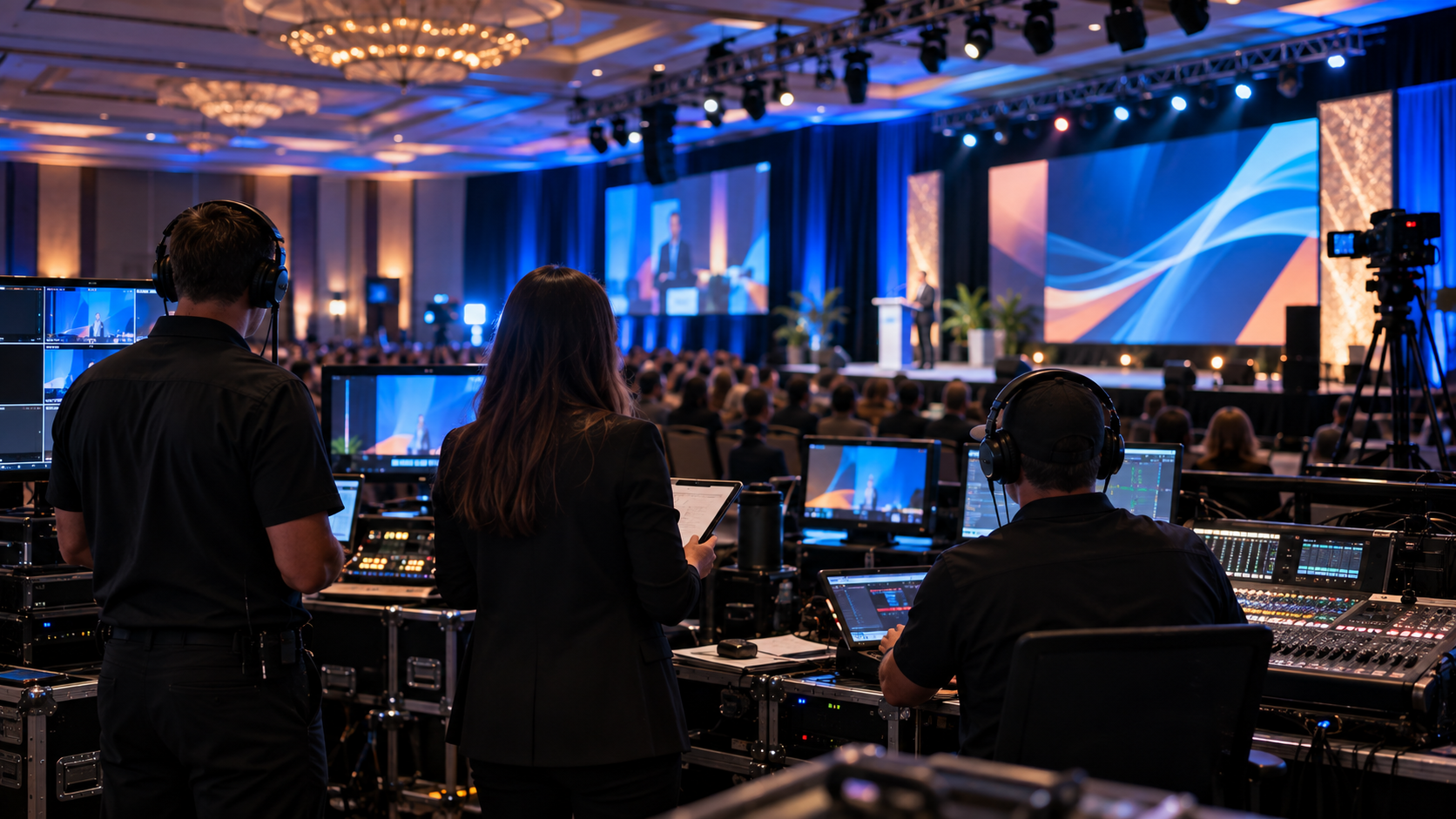
Proactive communication helps because the production team already understands the event context. Instead of starting from zero, they can evaluate the requested change against the existing plan and explain what is practical.
That creates faster decisions and fewer surprises for the planner.
It also changes the tone of show week. Rather than wondering whether the AV company received an update, the planner can focus on the hundreds of other details competing for attention.
Communication Matters Even More for Repeat Events and Venue Partnerships
For organizations producing one event after another, the value of a strong AV relationship compounds over time.
A production partner that understands your team, approval process, venue, audiences, brand expectations, recurring speakers, and event formats does not need to relearn everything from scratch each time.
This is one reason partnership becomes especially important for event venues and dedicated event spaces.
The AV team may support many different clients, planners, and event formats within the same property. Communication needs to work not only for one event, but across an ongoing relationship.
The same applies to universities and corporate organizations with recurring conferences, meetings, presentations, celebrations, and institutional events.
Familiarity creates value only when it is paired with consistent communication and professional execution.
What Working With Verum AV Is Designed to Feel Like
At Verum AV Solutions, the goal is not simply to deliver equipment to an event.
The goal is to make the production side easier for the people responsible for the event.
That starts with communication.
Verum emphasizes quick proposal turnaround, clear planning, crews that arrive prepared, professional execution on event day, and a production relationship that continues from the early planning stages through the final breakdown.
For venues and hospitality partners, that same approach extends to white-glove service and close collaboration with the property's event team.
The production crew should feel like an extension of the operation, not another vendor the venue has to manage.
Verum's event production services bring audio, video, lighting, staging, streaming, technical planning, and on-site execution together under one production team.
That gives planners a clearer path from the first production conversation to show day.
The Best AV Partnership Is the One You Do Not Have to Chase
When evaluating an AV company, do not stop at the equipment list.
Ask what happens after the contract is signed.
Ask who owns communication.
Ask when the production plan gets reviewed.
Ask what happens when something changes five days before the event.
Ask how the team prepares before arriving on site.
Those answers tell you whether you are hiring an equipment provider or building a production partnership.
The right AV partner should make you feel more informed as show day approaches, not less.
When communication is consistent, planning is proactive, and the production crew arrives ready, technology becomes what it should have been all along: one less thing for the event planner to worry about.
If you are planning an upcoming event or evaluating a long-term AV relationship, talk with Verum AV Solutions about your upcoming production to map out your production needs, communication expectations, and the support your team needs before show day.