What Does Corporate Event AV Cost? A Planner’s Guide to Budgeting for Conferences, Hotel Events, and Hybrid Meetings
Why Corporate Event AV Pricing Varies So Much
There is no single flat price for corporate event AV because every event has a different technical scope. A boardroom meeting with one presenter has very different needs than a hotel ballroom conference with keynote speakers, sponsor videos, lighting cues, breakout rooms, livestreaming, and a full production crew.
When an AV partner builds a quote, they are not only pricing equipment. They are also pricing planning time, setup, labor, transportation, technical support, rehearsals, show operation, and sometimes backup systems. That is why two events in the same venue can have very different AV budgets.
For events that need more than basic equipment, Verum AV Solutions’ event production services are built around the full technical experience, including audio, video, lighting, staging, and live show support.
The Biggest Factors That Affect Corporate Event AV Cost
Most AV budgets are shaped by a few core factors. Understanding these early can help planners compare quotes more accurately and avoid surprises later.
Event Size and Room Layout
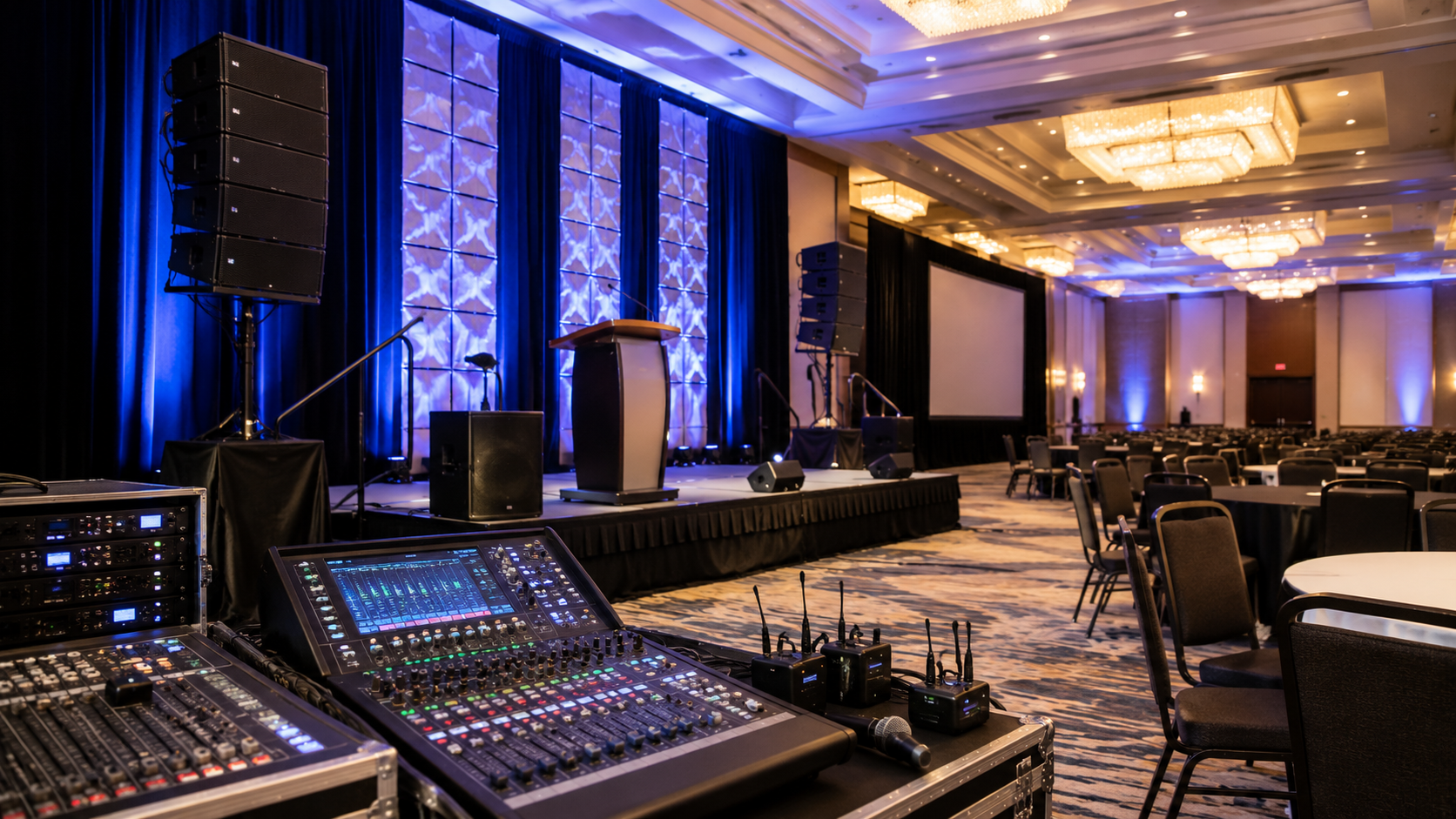
The larger the room, the more planning the AV setup usually requires. A small meeting room may only need basic audio and a display. A large ballroom may need multiple speakers, larger screens, stage lighting, confidence monitors, camera positions, and more crew members.
Room layout also matters. Theater seating, classroom seating, banquet rounds, exhibit space, and general session setups all affect sightlines, speaker placement, screen size, cable paths, and labor time.
Audio Requirements
Audio is one of the most important parts of any corporate event. Attendees may forgive simple visuals, but they will quickly lose focus if they cannot hear clearly.
Audio costs can change based on the number of microphones, the type of microphones, room coverage, speaker placement, presenter movement, panel discussions, audience Q&A, music playback, and recording needs.
Common audio needs include:
Handheld microphones
Lavalier microphones
Headset microphones
Podium microphones
Panel microphones
Wireless microphone coordination
Speakers and subwoofers
Mixing consoles
Audio technicians
A simple one-speaker presentation may be straightforward. A program with multiple presenters, transitions, video playback, and audience interaction needs more careful audio planning.
Video, Screens, and Presentation Support
Video needs can range from a basic presentation screen to a full visual system with multiple displays, cameras, playback, speaker timers, and confidence monitors. The more visual elements an event has, the more technical support it usually needs.
Screen size, projector brightness, LED wall needs, camera feeds, laptop switching, video playback, and livestream output can all affect the total AV quote. Planners should also consider whether presenters need to see their slides from the stage, whether remote participants need a clean feed, and whether the event will be recorded.
For events that include filming, recording, or livestream support, Verum AV’s video production capabilities can support the visual side of the event before, during, and after the program.
Lighting and Stage Design
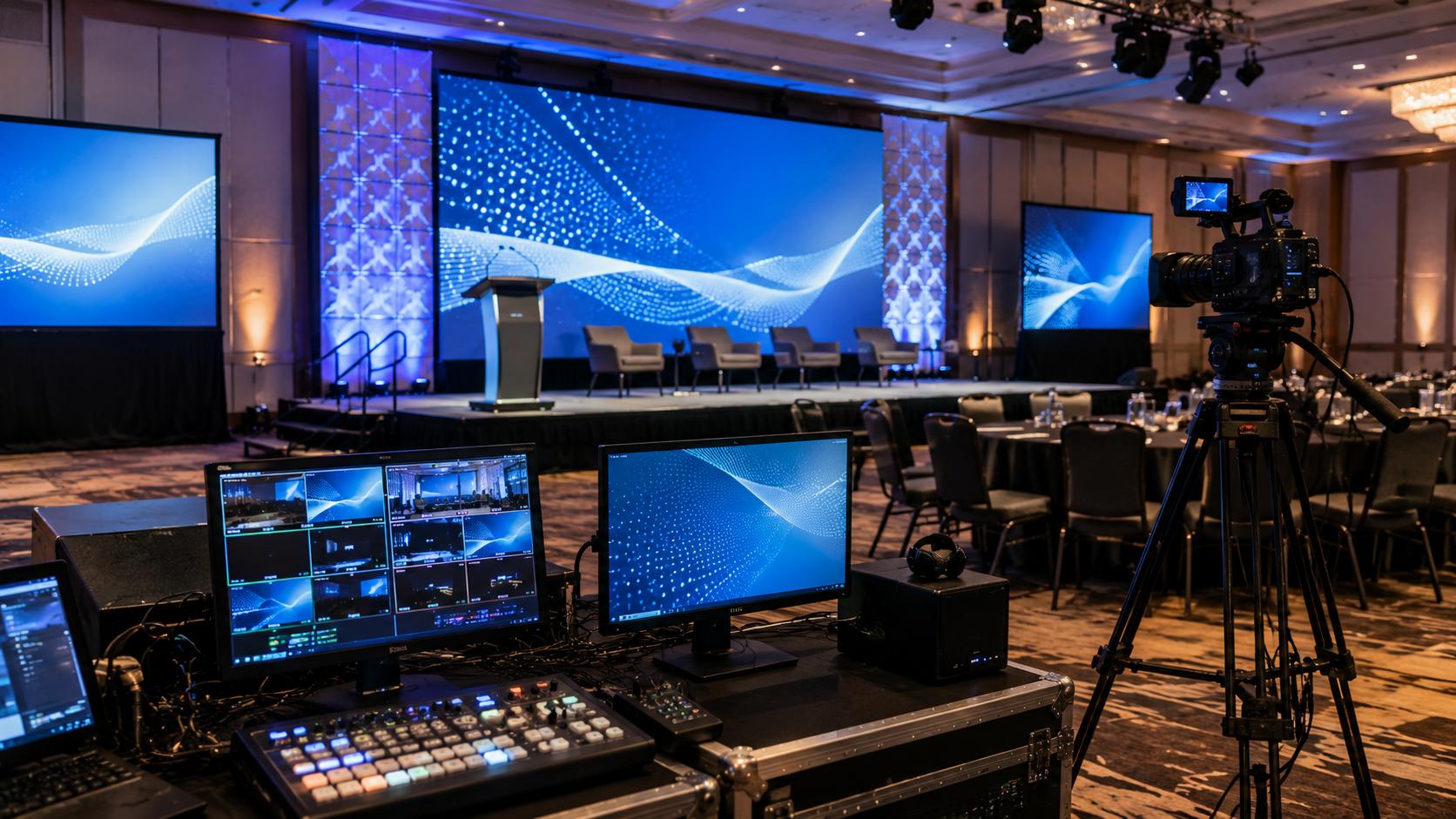
Lighting can have a major impact on how professional an event feels. It also affects photography, video recording, livestream quality, and the way speakers appear on stage.
Basic room lighting is not always enough for a corporate program. Events with keynote speakers, awards segments, entertainment, branded backdrops, sponsor moments, or camera coverage may need front lighting, stage lighting, uplighting, moving lights, or lighting control.
The more lighting looks and transitions the event requires, the more planning, equipment, and labor may be needed.
Labor and Technical Crew
Labor is one of the most important parts of corporate event AV cost. Equipment does not set itself up, operate itself, troubleshoot itself, or manage show cues during the live program.
A quote may include technicians for setup, rehearsal, show operation, and strike. Larger events may need audio engineers, video technicians, camera operators, lighting technicians, stagehands, technical directors, and production managers.
Event labor may include:
Pre-event planning
Load-in and setup
System testing
Presenter rehearsal
Live event operation
Breakout room support
Livestream monitoring
Load-out and strike
When comparing AV quotes, make sure each proposal includes the same labor assumptions. A lower quote may not include enough crew coverage for the event to run smoothly.
Hybrid and Livestream Needs
Hybrid events usually require more planning than standard in-person events because the production has to serve two audiences at once. People in the room need clear audio and visuals, while remote attendees need a clean stream, readable content, and reliable sound.
Hybrid event AV cost can be affected by cameras, capture cards, encoders, streaming platforms, internet requirements, remote speaker support, recording, graphics, and monitoring. It may also require more rehearsal time so presenters, slides, videos, and remote participants are ready before the event begins.
Venue Logistics
The venue can have a direct impact on AV pricing. Hotels, conference centers, event venues, and hospitality properties may have different rules for loading docks, freight elevators, power, rigging, internet, room access, security, insurance, and approved vendor access.
Some venues are simple to work in. Others require additional coordination, labor, or setup time. These details should be reviewed before the AV quote is finalized because they can affect schedule, staffing, and equipment choices.
What Should Be Included in a Corporate Event AV Quote?
A strong AV quote should be clear enough for the planner to understand what is included, what is optional, and what could change if the event scope changes.
A complete AV quote may include:
Audio equipment
Video equipment
Lighting equipment
Staging or scenic elements if needed
Labor and crew roles
Setup and strike schedule
Rehearsal support
Transportation or delivery
Livestream or recording needs
Power, rigging, or venue coordination notes
Any exclusions or assumptions
A vague AV quote can make budgeting harder. Ask for enough detail to understand the production plan, not just the price. Verum AV’s audio visual services page provides a helpful overview of the types of production support that may appear in an event AV scope.
How to Compare Event AV Pricing Without Choosing the Wrong Partner
It is common for planners to collect multiple AV quotes. The challenge is that the cheapest quote is not always the best value, and the most expensive quote is not automatically the most complete.
To compare AV pricing correctly, review the scope line by line. Make sure each company is quoting the same rooms, same schedule, same equipment needs, same labor coverage, and same rehearsal expectations.
Ask these questions when comparing AV quotes:
Does each quote include enough technicians?
Are setup, rehearsal, show time, and strike included?
Are breakout rooms included?
Is livestreaming or recording included?
Are backup systems included where needed?
Are venue fees or restrictions accounted for?
Does the quote explain what happens if the agenda changes?
If one quote is much lower than the others, ask what is missing. It may exclude labor, rehearsal, equipment redundancy, travel, breakout support, or technical direction.
Before making a final decision, review Verum AV’s guide on how to choose the right AV partner for corporate events, conferences, and hotel venues. It can help planners evaluate more than price alone.
Ways to Control Corporate Event AV Cost
A good AV budget is not about cutting important support. It is about making smart decisions early so the production plan matches the goals of the event.
Ways to control AV costs include:
Confirm the agenda before requesting a final quote.
Share the room layout and venue details early.
Decide whether the event needs recording or livestreaming.
Limit last-minute changes when possible.
Be clear about presenter needs and video playback.
Use the right production level for the audience and event type.
Ask which upgrades will have the biggest impact.
Separate must-have items from nice-to-have items.
The earlier the AV partner is involved, the easier it is to identify practical savings. Waiting until the last minute can lead to rush decisions, limited equipment options, and avoidable labor challenges.
Common AV Budget Mistakes to Avoid
Many AV budget problems happen because technical needs are underestimated early in the planning process. Once the event grows more complex, the original budget may no longer match the real scope.
Common AV budgeting mistakes include:
Budgeting only for equipment and not labor
Assuming the venue includes everything needed
Forgetting about rehearsals
Leaving out breakout rooms
Adding livestreaming too late
Choosing screen size without checking sightlines
Not planning for presenter changes
Ignoring power, internet, and loading requirements
Comparing quotes that do not include the same scope
These mistakes can lead to unexpected costs, rushed decisions, and a weaker attendee experience. A better approach is to define the event goals first, then build the AV plan around those goals.
So, What Should You Budget for Corporate Event AV?
The right corporate event AV budget depends on the event’s complexity, not just its size. A small executive event may need a polished production setup because the audience is high-value. A larger meeting may need a simpler setup if the agenda is straightforward.
Instead of starting with a fixed number, start with the event goals. Ask what attendees need to hear, see, experience, and remember. Then build the AV scope around those needs.
For simple meetings, the AV scope may be basic. For conferences, hotel events, hybrid meetings, awards programs, and general sessions, the AV budget should account for planning, labor, equipment, rehearsal, and live technical support.
Final Thoughts on Corporate Event AV Cost
Corporate event AV cost is not just a line item. It is part of how the event communicates, feels, and functions. Clear audio, strong visuals, reliable video, smooth transitions, and professional technical support all shape the attendee experience.
The best AV budget is one that matches the event’s goals, venue, audience, and risk level. When planners understand what affects pricing, they can compare quotes more confidently and choose an AV partner based on value, not guesswork.